







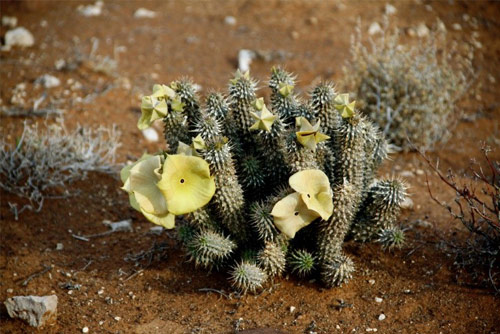
Hoodia gordonii has been sold as a natural appetite suppressant for more than two decades, promoted in pills, patches, teas, and “free trial” offers built around a compelling origin story: San hunters in the Kalahari chewing a succulent to stave off hunger on long expeditions. The story is real. The marketing built on top of it is not supported by credible human evidence.
This guide gives the honest answer on whether Hoodia works, what happened when serious money tested it properly, what to make of the claims about P57 and Hoodia patches, and what does have evidence behind it for patients who genuinely struggle with hunger while dieting.
Does Hoodia Gordonii Work? The Short Answer
There is essentially no credible human evidence that Hoodia gordonii produces meaningful appetite suppression or weight loss. It is not FDA-approved for weight loss or any other indication. It is sold as a dietary supplement, meaning it was never required to demonstrate that it works before going on sale — and it has not demonstrated it since.
This is not a promising ingredient awaiting research. Hoodia was investigated seriously, by companies with the resources to develop it, and the program was abandoned.
What Hoodia Gordonii Is
Hoodia gordonii is a spiny succulent native to the semi-arid regions of southern Africa, principally the Kalahari. It is not a cactus, despite the “cactus diet” framing common in supplement marketing — it belongs to a different plant family entirely.
The ethnobotanical basis is genuine: San communities have traditionally used Hoodia during long hunts, and that use is what attracted commercial interest. But traditional use of a raw plant in a specific context is a reason to investigate a compound. It is not evidence that a processed extract in a capsule reproduces the effect, at a known dose, in a different population, over a timeframe that matters for weight loss.
Wild Hoodia is also a protected species subject to international trade controls, which constrains authentic material — and analyses of retail products have repeatedly raised questions about whether what is in the bottle is what is on the label.
What About P57?
P57 is the steroidal glycoside isolated from Hoodia and identified as its candidate active compound. It is the peg the entire marketing category hangs on, and the claim usually runs: P57 acts on the hypothalamus, the brain’s appetite-regulating center, signaling satiety in a way that reduces hunger.
What is accurate: P57 is a real, identified compound, and preclinical work — laboratory and animal research — suggested a central mechanism affecting food intake. That signal is precisely why serious money got involved.
What is not accurate: preclinical activity is not clinical efficacy, and the gap between the two is where most candidate compounds die. A mechanism demonstrated in a rodent model tells you a hypothesis is worth testing in humans. It does not tell you the compound works in humans, at a tolerable dose, in a form you can put in a capsule and sell. The leap from “P57 affects food intake in animal studies” to “this supplement suppresses your appetite” is the entire fiction of the Hoodia industry.
The Pharma Program That Was Abandoned
The most important fact about Hoodia is one the supplement marketing never mentions: it was developed as a pharmaceutical candidate and dropped.
Rights to Hoodia-derived compounds moved through major commercial hands — including a licensing arrangement that brought Pfizer into the picture, and later a high-profile partnership with Unilever, which invested substantially in evaluating Hoodia as a functional food ingredient for weight management. Unilever ultimately discontinued its Hoodia program, and human research from that era did not support Hoodia as a safe, effective weight-loss agent.
Consider what that means. A company with enormous resources, a strong commercial incentive, and full access to authentic standardized material tested this ingredient properly — and walked away. Supplement sellers have not run better studies; they simply skipped the step where you find out. When a well-funded program abandons a compound and the retail market keeps selling it anyway, the retail market is not ahead of the science. It is selling to people who never heard the result.
Hoodia Patches, “Prescription” Hoodia, and Other Red Flags
Some of the specific claims circulating about Hoodia deserve direct correction, because they show up constantly and each one is a signal to walk away.
- “The patch delivers controlled release.” Transdermal delivery is not a formatting choice — it is a pharmacological property. A molecule crosses skin in useful quantities only if its size, solubility, and charge permit it, and that must be demonstrated, not asserted. There is no credible evidence supporting transdermal Hoodia delivery at any meaningful dose. A patch that delivers nothing systemically is a sticker.
- “Prescription Hoodia from a compounding pharmacy.” Hoodia is not an approved drug. Sourcing an unproven botanical through a compounding pharmacy does not confer efficacy or regulatory approval. It changes the supply chain, not the science.
- “There are no real contraindications.” This gets the burden of proof backwards. An absence of documented adverse effects in a product never rigorously studied in humans is not a safety finding — it is a measurement failure.
- “Free trial” offers. Typically negative-option billing: the trial enrolls the buyer in a recurring subscription that is deliberately difficult to cancel. That tells you what the seller thinks of the product’s ability to earn a second purchase on its merits.
- Hoodia combined with ephedra. Ephedrine alkaloids were removed from the US supplement market over serious cardiovascular safety concerns. Any product pairing Hoodia with ephedra-like stimulants should be treated as a hazard — and whatever appetite effect the buyer notices is coming from the stimulant, not the succulent.
Why Hunger During Dieting Is a Real Problem Worth Solving
None of the above means the underlying complaint is imaginary. Hunger during caloric restriction is one of the most reliable reasons weight loss attempts fail, and it is physiological rather than a failure of character.
Ready to put this into practice?
Explore Empire's hands-on, CME-accredited Medical Weight Loss & Metabolic Health courses — live patients, expert faculty, and ongoing mentorship.
When body mass drops, the body defends it: leptin falls, ghrelin rises, energy expenditure adapts downward, and the drive to eat increases — a coordinated response that does not politely resolve after a few weeks. Telling a patient in that state to try harder is bad medicine. The impulse to reach for an appetite suppressant is entirely rational.
Which is why the Hoodia market exists, and why it does harm beyond the wasted money. Every month spent on a supplement that does nothing is a month not spent on something that might have worked — and when the supplement fails, most patients conclude that they failed, not the product.
What Actually Has Evidence Behind It
The honest alternative to an unproven supplement is not a different supplement. It is medically supervised weight management, which has an evidence base the botanical market cannot approach.
GLP-1 receptor agonists. This class of prescription medications has substantially changed obesity treatment. They act on the physiology the supplement market only claims to touch — slowing gastric emptying and acting on central appetite regulation to genuinely reduce hunger and food preoccupation. They are FDA-approved and studied in large randomized trials. They also carry real considerations that make supervision necessary rather than optional: gastrointestinal side effects, contraindications, cost and coverage complexity, lean mass preservation, and what happens on discontinuation.
Other pharmacotherapy. Additional approved agents exist with different mechanisms and profiles. Selection is a clinical decision based on the patient and their comorbidities — not a shelf choice.
The unglamorous foundation. Sustained protein intake, resistance training to protect lean mass, sleep, and structured behavioral support determine whether any pharmacological intervention produces a durable result.
The common thread is supervision — a clinician evaluating the patient, selecting the approach, monitoring response, and adjusting. That, not the ingredient, is the actual difference between medical weight management and buying a bottle.
How Clinicians Should Handle the Hoodia Question
Patients will ask, and some arrive already taking it.
- Ask about supplements directly. Patients routinely omit them because they do not think of supplements as medications. Ask what else is in the product — combination formulas frequently contain stimulants that matter clinically.
- Correct without condescending. A patient who bought Hoodia was trying to solve a real problem with the information available to them. Explaining why the evidence isn’t there, and what is, respects that. Mocking them ends the conversation.
- Redirect to the mechanism. The most useful thing you can tell a patient chasing appetite suppression is that the physiology they are fighting is real and treatable — just not with that bottle.
Frequently Asked Questions
Does Hoodia gordonii really work for weight loss?
There is no credible human evidence that it does. It is not FDA-approved for weight loss, and a well-funded development program evaluating it was discontinued. The absence of evidence is not a gap waiting to be filled — it reflects what happened when the ingredient was actually tested.
Is Hoodia safe?
Unstudied is not the same as safe. Because Hoodia has never undergone rigorous long-term human safety evaluation, claims that it has “no contraindications” are unsupported. Additional concerns: retail products have raised questions about whether they contain what the label says, and combination formulas often contain ephedra-type stimulants that carry genuine cardiovascular risk.
What is P57?
A steroidal glycoside isolated from Hoodia and identified as its candidate active compound. Preclinical research suggested a possible central effect on food intake, which is why it drew pharmaceutical interest. Preclinical activity is not clinical efficacy, and human results did not support developing it into a weight-loss product.
If Hoodia doesn’t work, why do some people say it helped them?
Reasons that have nothing to do with Hoodia: expectancy effects are powerful in appetite research; people who buy a suppressant are usually restricting intake at the same time and attributing the result to the pill; and combination products often contain stimulants that do blunt appetite. If a Hoodia product is producing a real effect, the most likely explanation is something else in the bottle.
What should I do instead if hunger is derailing my weight loss?
See a clinician who practices medical weight management. Hunger during caloric restriction is a physiological adaptation, not a discipline problem, and it responds to approaches with real evidence behind them — including GLP-1 receptor agonists and other approved pharmacotherapy, selected and monitored for your situation.
Train to Deliver Weight Management That Actually Works
The Hoodia market exists because patients are desperate for help with a physiological problem and the medical system has often failed to offer them anything credible. That gap gets filled by whoever shows up — and for twenty years, what showed up was a succulent extract with no evidence behind it.
Clinicians can fill it better. Empire Medical Training’s Physician Medical Weight Loss Training is a CME-accredited program covering the physiology of appetite and weight regulation, patient evaluation, current pharmacotherapy including GLP-1 medications, and how to build a supervised weight management program on evidence rather than hope. See also our look at whether MIC/B12 injections work and our guide to synthetic versus bioidentical hormones.



 Claim Your Prize!