







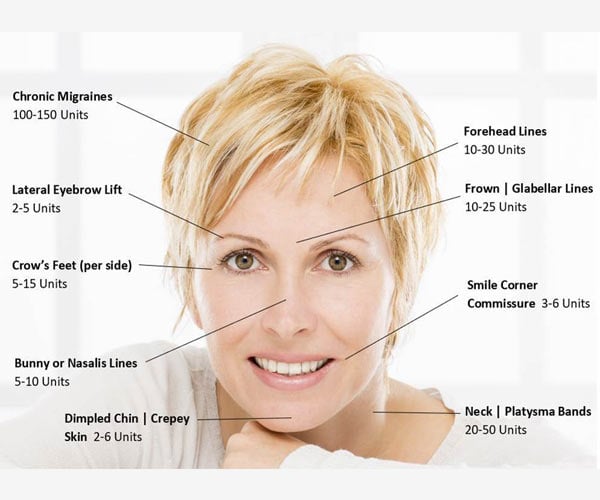
Botox® has a reputation as a women’s treatment, and the numbers still support that — the large majority of patients are female. But the male share has been climbing for years, and by some estimates men now account for up to 30 percent of all Botox procedures. The nickname “brotox” stuck for a reason.
Here’s what most articles on Botox for men get wrong: they treat it as the same procedure with a different patient in the chair. It isn’t. Men generally carry more facial muscle mass, they typically need higher unit counts, and — most importantly — they usually want a different result. A technique that produces a beautiful outcome on a female patient can make a male patient look distorted. This guide covers the best treatment areas for men, why dosing differs, the specific technique adjustments that keep results looking masculine, and when to start.
Why Men Get Botox
The motivations overlap heavily with women’s, with a few consistent differences in emphasis.
Most male patients aren’t chasing a dramatic change. They want to look less tired, less angry, and less worn down — while still looking like themselves. “I don’t want anyone to know I had anything done” is close to a universal opening line. That constraint shapes everything downstream: dosing strategy, injection pattern, and how much movement gets preserved.
The other driver is medical. Botox is not only an anti-wrinkle treatment, and several therapeutic indications are especially popular with men:
- Chronic migraine — injections across the head and neck can reduce attack frequency in chronic sufferers.
- Excessive sweating (hyperhidrosis) — a common and often under-treated complaint in men.
- Bruxism, TMJ pain, and square jaw — treated through the masseter and other lower facial muscles.
- Blepharospasm — involuntary eyelid movements.
Botox has the same FDA-approved indications regardless of sex. What differs is dose, technique, and aesthetic target. For the underlying pharmacology, see our guide on what Botox is and how it works.
Best Botox Treatment Areas for Men
The most popular injection sites for men sit on the head and face, though useful treatment areas extend well below the jawline.
Forehead Lines
The horizontal lines across the forehead are the single most requested area, and the one most often botched in male patients. Treatment targets the frontalis muscle and requires multiple injection points. Dosing here runs relatively high compared with more delicate regions of the face — and higher still in men. This is also where technique diverges most sharply between male and female patients, which we cover in detail below.
Glabellar Lines (the “11s”)
The vertical lines between the eyebrows deepen with age and are strongly associated with an angry or intense resting expression — a common complaint among male patients. A small, well-placed dose relaxes the responsible muscles and softens the appearance. Male corrugators are typically stronger and bulkier than female corrugators, which is a major reason men frequently need more product here.
Crow’s Feet
Injections at the outer corners of the eyes soften the fine lines that fan outward with smiling and squinting. Placement matters: the injector must stay clear of the eyelid, where diffusion can cause ptosis, or drooping.
Nose Area
Botox along the top and sides of the nose treats bunny lines — the scrunching that becomes more pronounced with age. Injections around the nose can also soften nasolabial folds extending down toward the mouth.
Mouth Area
Several injection sites ring the mouth. Complaints treatable here include:
- Perioral lines
- Smoker’s lines
- Frown lines and marionette lines
This region demands restraint. Injecting the wrong muscles around the mouth can produce a drooping lip or a “frozen smile” — an outcome no patient forgives quickly.
Chin
Chin injections address dimpling or “pebbling” of the chin, along with frown and marionette lines affecting the lower face.
Neck
Injected into the platysma, Botox temporarily reduces the appearance of platysmal bands — the vertical cords that become prominent with age in both men and women.
Underarms, Groin, Palms, and Soles
Therapeutic Botox is an increasingly popular hyperhidrosis treatment. Typical injection sites include the underarms and groin, and sometimes the palms and soles.
Bladder
Therapeutic Botox is also used to treat urinary incontinence via intradetrusor injection.
For placement specifics across every region, see our complete Botox injection sites guide.
Do Men Need More Botox Than Women?
Generally, yes — and this is the central clinical point of male treatment.
Men, on average, have greater facial muscle mass than women. The difference is most pronounced in exactly the muscles cosmetic Botox targets: the frontalis, the corrugator complex, and the masseter. A larger, stronger muscle requires more neuromodulator to achieve the same degree of relaxation. Underdose a male frontalis using a female treatment plan and the result is a patient who returns in two weeks reporting that “nothing happened.”
In practice, this means a provider treating a male patient will often select a dose at or near the top of the recommended range for the relevant area rather than the middle or bottom. Published dosing ranges for each indication still apply — men aren’t treated outside the label, they’re treated at the upper end of it. Exactly where within that range depends on the individual, not the sex: muscle bulk varies enormously between patients, and a slightly built man may need less than a strong-browed woman. Assessment of the muscle at rest and in animation, not a chart, should drive the number.
Two practical consequences follow. First, higher unit counts mean higher cost, since Botox is generally priced per unit. Second, men may find results wane somewhat sooner and require more frequent touch-ups to maintain the effect — a stronger muscle recovers function faster.
The Technique Difference: Softening Without Feminizing
Dosing is the easy part. The harder skill is the aesthetic goal.
Start with anatomy. The frontalis — also called the occipitofrontalis or epicranius — is a thin muscle on the front of the head with no bony attachments. Its medial fibers are continuous with the procerus, part of the glabellar complex, which is why an injector working the glabella must understand where frontalis fibers begin in order to avoid hitting them inadvertently. The frontalis’s primary function is elevation: it lifts the eyebrows, opposing the orbital portion of the orbicularis oculi and the glabellar complex, which act as depressors. Botox relaxes the muscle by blocking acetylcholine release at the neuromuscular junction.
So when you inject the frontalis, you aren’t only softening rhytids. You are removing an elevator. The brow shifts downward. The question is whether it shifts downward evenly.
Ready to put this into practice?
Explore Empire's hands-on, CME-accredited Aesthetic & Injectable Training courses — live patients, expert faculty, and ongoing mentorship.
Here is where male and female treatment separate. Female patients typically request a slight lateral eyebrow lift — the arched, elevated tail of the brow. Male patients generally do not, and a male brow given that arch reads as odd or distorted. The masculine brow sits flatter, lower, and heavier. Preserving that position is the defining technical goal of male forehead treatment.
The mechanism of the error is straightforward. Many patients present with rhytids concentrated in the central forehead, and the natural instinct is to target exactly what you see — inject the middle, skip the sides. Do that and only the central frontalis depresses. The lateral frontalis remains intact and retains its function as an elevator, lifting the outer forehead while the center drops. The result is pointed, upward-angled eyebrows and a patient whose resting expression now reads as mean or angry — the opposite of what he asked for.
The fix: begin injections laterally and work across the forehead. Placing the first injections laterally and moving medially causes the forehead to depress symmetrically, preserving a flat brow line. This applies to male and female patients alike as the default. The exception is the patient — usually but not always female — who specifically wants that pronounced lateral brow lift, in which case targeting only the central frontalis rhytids becomes a deliberate choice rather than an accident.
This is a technique, not a talent. It isn’t difficult. But it needs to be practiced, and it is performed incorrectly often enough that correcting another injector’s work is a recurring category of patient visit. The broader lesson: injectors who simply chase lines and wrinkles wherever they see them, without understanding the muscle anatomy underneath, will keep producing outcomes they didn’t intend. Sculpting and contouring the face with Botox requires knowing which muscle does what — and what happens when you switch it off.
Masseter and Jawline Treatment
Higher-dose injections into the muscles of the jaw, particularly the masseter, relax chronic clenching. This has become one of the most requested male treatments for two reasons at once.
Therapeutically, it addresses bruxism — involuntary jaw clenching and grinding — along with TMJ pain, in patients who often haven’t responded to splints or conservative measures. Cosmetically, it slims a square, over-developed jawline. Note that these two goals can pull in opposite directions for male patients: some men want the pain relief but not the jaw slimming, since a strong jawline is often something they’d prefer to keep. That conversation belongs in the consultation, before the first injection. Dosing here is substantially higher than for upper-face cosmetic work, and the masseter is a large muscle with meaningful bulk in men. Our guide on Botox for jaw clenching and bruxism covers the protocol.
What Age Should a Man Start Botox?
It depends entirely on the objective.
For preventative treatment, the window is somewhere between the mid-to-late 20s and early 30s. That sounds early, and it is — the point is that you’re targeting lines that aren’t visible yet. The hundreds of facial expressions repeated every day drive muscle contractions that eventually etch permanent crow’s feet, frown lines, and forehead lines. Those lines become more visible through the 30s as facial collagen and elastin decline, reducing volume and skin plasticity. The recommended age for a first preventative treatment is the same for men and women; there is no physiological difference on the starting-age question.
For lines that already exist, the right time is whenever you’re ready to address them — commonly anywhere from 35 to 50, depending on genetics, sun exposure, and skin care history. Expect to prioritize: deeply established wrinkles may need to be addressed before ones that are just forming, and full erasure of deep static lines isn’t what neuromodulators do. Older patients are also somewhat more likely to be excluded from treatment for medical reasons and may see more noticeable bruising afterward.
Start now or wait? It comes down to preference. If you’re uneasy about it, waiting until the concern feels more pressing is a perfectly reasonable choice.
What to Expect: Results, Timeline, and Side Effects
The active ingredient is botulinum toxin type A, which temporarily relaxes muscles near the injection site. Cosmetic treatment targets the facial and head muscles responsible for lines and wrinkles; therapeutic treatment targets muscles responsible for involuntary movement or pain, or acts on structures like sweat glands.
Results take a few days to appear, with full effect typically at one to two weeks. Depending on the patient, dose, and area treated, effects begin to wane within three to six months, and repeat treatment is needed to maintain them. Our guide on how long Botox takes to work breaks down the timeline in detail.
Most side effects are mild and temporary:
- Mild swelling or bruising at the injection site
- Tenderness or soreness
- Minor bleeding
More serious complications are rare but can include muscle weakness, temporary facial paralysis such as eyelid drooping (ptosis), and — in the context of bladder treatment — urinary retention or incontinence.
Some men shouldn’t receive Botox at all. Common contraindications include:
- Neurological conditions such as myasthenia gravis
- Keloidal scarring
- Allergy to any component of the product, or to local anesthetics like lidocaine
- Certain facial abnormalities
There are also regions where injection carries elevated risk: blood vessels, deep muscle tissue, the eyelids (where injection can cause ptosis), and certain muscles around the mouth, where misplacement can produce a drooping lip or frozen smile. A thorough Botox consultation should surface all of this before anyone picks up a syringe.
Frequently Asked Questions
How many units of Botox do men need?
More than women, as a rule — but the specific number depends on the area, the individual’s muscle bulk, and the treatment goal. Because men generally have greater mass in the frontalis, corrugators, and masseter, providers commonly dose at or near the upper end of the recommended range for a given indication rather than the middle. There’s no fixed “male dose.” A proper assessment of the muscle at rest and in animation determines it.
At what age should a man start Botox?
Mid-to-late 20s through early 30s for preventative treatment aimed at lines that haven’t appeared yet. Anywhere from 35 to 50 for treating lines that already exist — really, whenever you’re ready to address them. The starting age is the same for men as for women.
Does Botox look natural on men?
It does when it’s dosed and placed correctly. The two things that make male Botox look wrong are underdosing (no visible change, wasted money) and creating a lateral brow lift, which arches the brow and feminizes the face. Beginning injections laterally and working across the forehead depresses the brow evenly and preserves the flatter, lower brow position that reads as masculine. Natural-looking male results come from technique, not from using less product.
How much more does Botox cost for men?
Botox is generally priced per unit, so if a man needs more units to achieve the same result, his treatment costs proportionally more. There’s no separate men’s pricing — the higher total simply reflects the higher dose. Men may also need somewhat more frequent touch-ups, which adds to annual cost. Ask any provider for per-unit pricing and an estimated unit count for your specific treatment areas.
Do men need more Botox than women?
Typically yes, for the same area, because of greater average facial muscle mass. But this is an average, not a rule about individuals. A man with a slight build may need less than a woman with a strong glabellar complex. Sex is a starting assumption; the physical exam is the actual answer.
Where do men get Botox most?
The forehead, the glabella (frown lines between the brows), and the crow’s feet at the outer corners of the eyes are the three most common cosmetic areas. On the therapeutic side, masseter injections for jaw clenching and TMJ, and treatment for excessive sweating and chronic migraine, are all particularly popular with male patients.
Learn to Inject Male Patients Correctly
Male Botox is where the gap between an adequate injector and a skilled one becomes visible on the patient’s face. Dosing to muscle mass, preserving a masculine brow, sequencing injections laterally rather than chasing central rhytids, managing masseter bulk without erasing a jawline — none of these are difficult. They’re just techniques that have to be taught and practiced.
Empire Medical Training has trained healthcare professionals in aesthetic medicine since 1998, working with a physician faculty of more than 40 specialists across aesthetics. Our Botox Training & Certification course is CME-accredited and hands-on, covering facial muscle anatomy, sculpting and contouring, male-versus-female technique, and complication management — with live-patient injection under expert supervision. Get the injections under your belt before the patient in your chair is paying for them.



 Claim Your Prize!